By Clever Marisa
The 2026 National Budget has attracted diverse reactions, including the strong criticism presented by Linda Tsungirirai Masarira on behalf of LEAD. While Ms. Masarira raises concerns that deserve national reflection, it is equally important to ground this discussion in evidence, economic realities, and the broader developmental trajectory Zimbabwe is pursuing under the Second Republic.
As scholars, policymakers, and citizens, we must avoid the temptation to interpret every budget through purely populist lenses. The responsibility of government is not only to spend, but to balance, stabilise, and invest sustainably, and this budget takes deliberate steps in that direction.
I will, therefore, address each of the areas she mentioned in her article, responding point by point, to provide a comprehensive rebuttal.
Stability with a Purpose: Building a Foundation for Inclusive Growth
The assertion that the budget focuses on “stability without soul” overlooks the fact that economic stability is the backbone of social justice. No nation can deliver sustainable social protection, free education, or universal healthcare in an unstable macroeconomic environment.
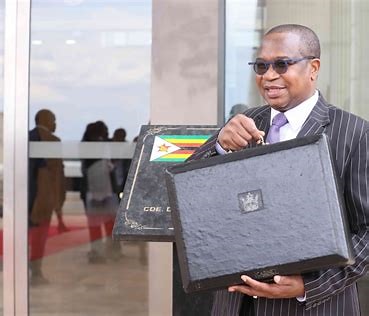
The Minister of Finance, Prof. Mthuli Ncube, has made it clear that macroeconomic stability is not an end in itself, but a prerequisite for achieving the very social advances LEAD is calling for: inflation control, currency stabilisation, predictable taxation, and disciplined expenditures are not technocratic whims; but they are the conditions under which welfare programmes can thrive.
VAT and IMTT Reforms: A Balanced Approach, Not a War on the Poor
While concerns about VAT increases are understandable, it is misleading to frame this as a “tax on poverty.” Zimbabwe’s VAT rate remains within regional and international norms. More importantly:
· Essential goods remain zero-rated or VAT-exempt, protecting the poor.
· The IMTT reduction brings relief to millions who transact digitally and supports the formalisation of the economy.
· This policy mix broadens the revenue base while avoiding punitive income tax hikes that would disproportionately hurt workers.
In a fragile economy, the government must mobilise internal resources to reduce donor dependence. VAT and IMTT reforms are one of the few viable levers, not an attack on the poor, but an adjustment aligned to long-term sustainability.
Health Allocation: Progressive, Realistic, and Strategically Targeted
LEAD criticises the 10.5% health allocation for falling short of the Abuja target. While aspirations matter, the Abuja Declaration itself recognises the contextual limitations of fiscal space. Zimbabwe’s 10.5%:
· Is among the highest allocations in the region.
· Prioritises primary healthcare, maternal health, drug procurement, and disease surveillance.
· Comes at a time when donor inflows are declining, making domestic prioritisation more critical than ever.
The government cannot transform the health sector overnight. Still, it is moving steadily toward universal healthcare through free primary care, the retooling of district hospitals, and the commissioning of new specialist facilities.
Education Vote: The Foundation for Vision 2030
The budget allocates the largest share to education, demonstrating a commitment to human capital development. While LEAD demands immediate free basic education and total infrastructure overhaul, such transformations require phased implementation, not impulsive spending.
The government has already:
· Expanded BEAM coverage significantly.
· Prioritised teacher recruitment despite the wage bill cap.
· Invested in rural schools through the devolution fund.
This budget reinforces, but does not abandon, the march toward equitable quality education.
Social Protection: Strengthening Safety Nets in a Tight Fiscal Space
Allocating 4.4% to social protection in a recovering economy is not a “thin lifeline”; it is a strategically targeted intervention. Government is:
· Rolling out food assistance to vulnerable households.
· Expanding disability grants.
· Modernising the pension system.
· Supporting child protection programmes.
While more is needed, the direction is correct. Social protection must grow gradually in line with economic expansion, but not at the expense of fiscal collapse.
Labour & Wage Bill Management: Discipline for Future Prosperity
The wage bill cap is not an attack on labour but a necessary discipline. A bloated wage bill crowds out capital investments that ultimately benefit workers, roads, hospitals, dams, schools, and energy systems.
Recruitment prioritises education, health, and the very pillars of state functionality. This is sound economics, not anti-labour sentiment.
Energy & Industrialisation: Building Blocks Are Being Laid
Transforming energy systems requires billions in investment. The government is already partnering with private players and international financiers on:
· New solar parks.
· Hwange Unit 7 & 8 stabilisation.
· Rural electrification acceleration.
· Major grid rehabilitation projects.
The budget alone cannot carry the energy transformation. It provides policy direction while leveraging public-private partnerships.
Conclusion: A Budget That Builds, Rather Than Breaks
Rather than dismissing the 2026 budget as “soulless,” we must appreciate its strategic balancing act. It is a budget that:
· Protects the vulnerable while maintaining fiscal discipline.
· Prioritises health and education within realistic limits.
· Focuses on long-term structural transformation rather than instant gratification.
· Aligns with the national agenda of achieving an upper-middle-income economy by 2030.
This is not a budget that ignores the people, but it is a budget that seeks to build an economy capable of supporting its people sustainably.
Zimbabwe’s future will not be secured through emotional populism, but through steady, evidence-based planning. In that regard, the Minister of Finance and Government have taken a responsible, forward-looking, and courageous stance. In my view, this is a budget that lays the groundwork for real development, and that deserves national support, not blanket condemnation.
Clever Marisa (PhD), Social Scientist and Public Health Practitioner. The views expressed here are his own and do not necessarily reflect the views of his affiliated institution or any organization.