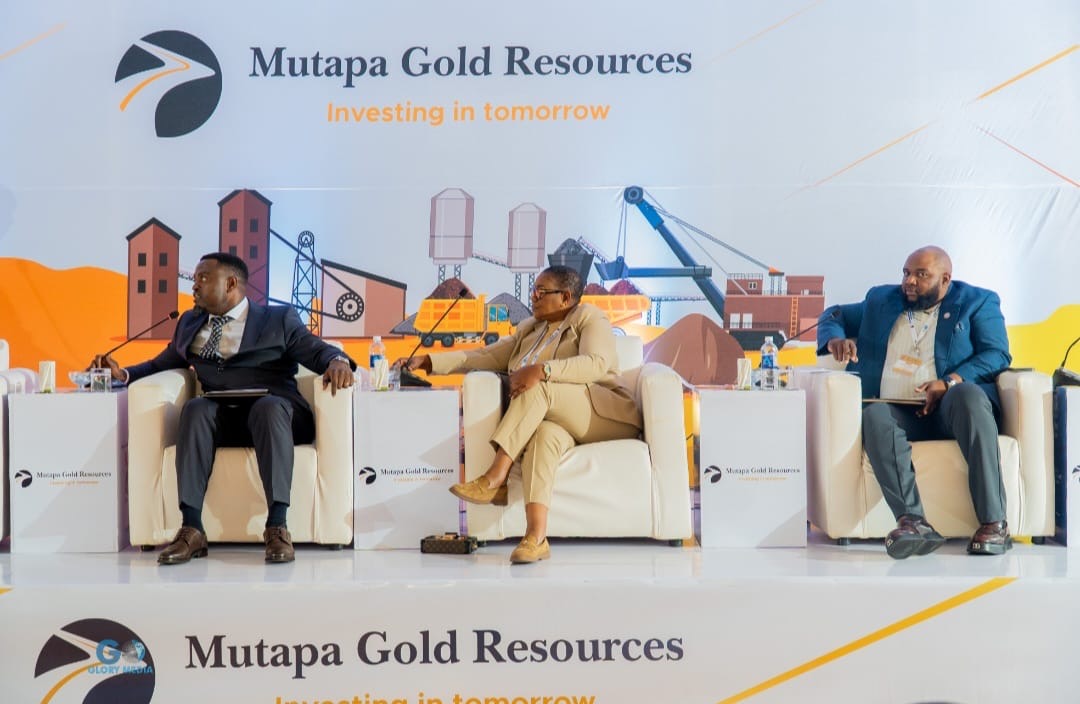
Victoria Falls – The national vice chairman of Miners for Economic Development Cde Dru Edmund Kucherera, has issued a clarion call for the transformation of Zimbabwe’s artisanal and small-scale mining (ASM) sector, arguing that formalisation is not merely a regulatory exercise but a developmental process crucial for national prosperity.
Speaking during a panel discussion at the Chamber of Mines Gold Symposium held here, Cde Kucherera presented a comprehensive roadmap to bring informal miners into the legal fold, emphasising that the sector is now the bedrock of the country's gold industry.
A Pillar of the Economy
Cde Kucherera highlighted the staggering contribution of the ASM sector, noting that it now accounts for nearly 75 percent of the nation's gold output and supports the livelihoods of approximately one million Zimbabweans . He revealed that in 2025 alone, artisanal miners delivered more than 34,000 kilograms of gold, marking a remarkable 47 percent growth compared to the previous year .
"These figures demonstrate that artisanal mining is no longer a peripheral activity. It is a major pillar of our national economy," Cde Kucherera stated. Despite this contribution, he lamented that many miners continue to operate in a "legal grey area," facing challenges in accessing finance, technology, and secure mining rights.
The Need for Legal Recognition
A key plank of Cde Kucherera’s address was the necessity for the law to explicitly recognise artisanal miners as a distinct category. While welcoming the new Mines and Minerals Bill as a step forward, he cautioned that it remains "largely silent on the specific identity and realities of artisanal miners."
"Formalisation begins with identity. If the law does not recognise artisanal miners as a distinct category, then many will continue to remain outside the formal economy," he argued. This sentiment aligns with calls from various stakeholders, including the Parliamentary Legal Committee, which has noted that the definition of a small-scale miner in the current Bill may not be wide enough to include artisanal miners, potentially leading to discrimination .
A Phased Transitional Approach
Rejecting a "one-size-fits-all" compliance regime, Cde Kucherera proposed a Transitional Compliance Period of three to five years. This phased approach would allow miners to progressively move toward full compliance while receiving the necessary support.
He outlined a three-stage process:
1. Basic Registration: Simplified procedures, affordable fees, and access to legal gold-buying centres.
2. Capacity Building: Access to training in environmental management, occupational health, and mercury reduction technologies .
3. Full Compliance: Involving environmental impact assessments and tax registration.
"We must provide practical solutions... You cannot arrest your way out of informality," Cde Kucherera asserted, drawing on lessons from countries like Peru and Colombia that shifted from criminalisation to coexistence frameworks.
Empowerment, Environment, and Inclusion
The Miners For Economic Development vice chairman stressed that formalisation must go hand-in-hand with addressing environmental concerns, particularly the use of mercury. He called for investments in mercury-free technologies and incentives for cleaner mining methods.
Furthermore, he advocated for greater inclusion of women and young people in the sector, calling for gender-balanced leadership structures and targeted financial support. He also emphasised the need for financial inclusion, noting that miners need access to capital to invest in safer and more productive operations, which can be achieved through cooperative models and government guarantees.
A Call to Action
Concluding his address, Cde Kucherera called upon policymakers to:
· Recognise artisanal miners explicitly within the law.
· Implement a phased compliance framework.
· Promote mercury reduction through incentives.
· Unlock financing through innovative partnerships.
"Formalisation is not about paperwork. It is about dignity. It is about opportunity," he said. "The artisanal mining sector is not a problem to be solved. It is an opportunity to be seized."
The Gold Symposium, which ran concurrently with the Chamber of Mines Annual Mining Conference and Exhibition, has seen strong calls from industry leaders for accelerated formalisation to unlock the full value of the sector and sustain long-term industry growth.